

Falling back in love with running, one trail at a time
Three big lessons from a month of running for the hills

It’s official, folks: I’m running. Not for office, but for scores of miles across the foothills of Boise, Idaho.
I grew up as a runner, a cross country kid starting in middle school mainly as a way to get in shape for basketball season. It turns out that my basketball skills were, in the scheme of things, quite mediocre; but I took running with me as a consolation prize. I ran in college, after college, and all over the place in Washington, DC while I was getting my PhD. Many half marathons, and one ill-fated full marathon later (I went out way too hard and crashed at mile 19), I had established “runner” as a basic tentpole identity for myself.
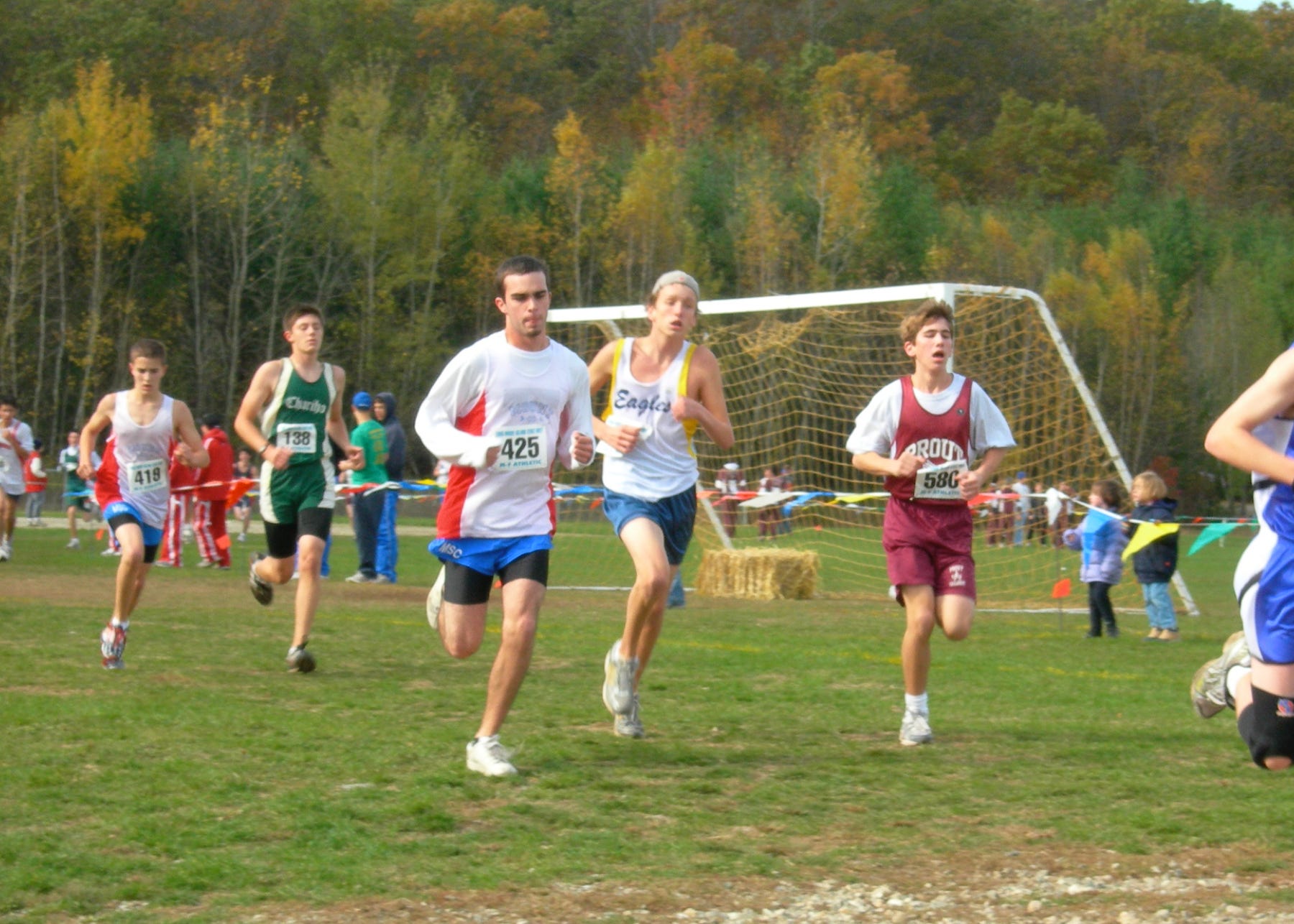
But since I moved to Boise just about 7 years ago this week, things have been different. I just haven’t been running as much, and for the most part haven’t sapped the same joy or motivation from it that I used to when I do manage to get out there. I am unsure who or what precisely to blame for this: the pandemic that arrived shortly after I moved here, an intensifying career, and an aging body are all probable candidates. But the upshot is that running has come to feel less like a fun, healthy hobby and more like a chore to stave off my rapid and inevitable corporeal decline.
Then, just when I needed it most, I came across an article about the upcoming Boise Trails Challenge, a monthlong competition in which participants attempt to traverse — by mountain bike, on foot, or both — 160+ miles of Boise’s well-maintained, much-beloved foothills trails. I entered on a whim, moved by the challenge’s tragic but beautiful history, the assurance that most of my entrance fee would go to trail restoration, and the hope that this would force me to get in shape again.
I had no illusions that I would be a top competitor; and, before you jump to conclusions, I’ll spoil that I very much was not one. Many, like me, do not manage to finish the challenge in the month prescribed; some truly insane people complete the challenge in 24 hours or less, opting to begin at midnight on the day the challenge begins and forgoing sleep in favor of biking by headlamp.
I did not finish the challenge, but I did manage a respectable proportion of the trails they map out. The result was more running or hiking than I’ve likely ever done in my life in such a short period of time. From June 18, when the challenge started, until July 21, which was my last day doing the challenge, I ran, walked, or hiked 142 miles. According to data from the various smartphones and smartwatches I’ve been using to track my exercise since September of 2009, that’s 30 miles more than any one calendar month in the last 17 years (although, if the data are to be believed, September of 2013 and October of 2015 were also real doozies).
I won’t pretend I’m not proud of this accomplishment, especially at my quickly-ripening age, and I’m pleased to be in some inarguably solid physical shape for the first time in awhile. But what I didn’t know when I started the BTC were the stories and lessons about running; about my hometown and the fleeting preciousness of its natural beauty; and, of course, about myself, that I’d gather along the way. These lessons, I’m sure, will far outlast me or any fitness-tracking records achieved while I was out there. I’ll offer just a few here.
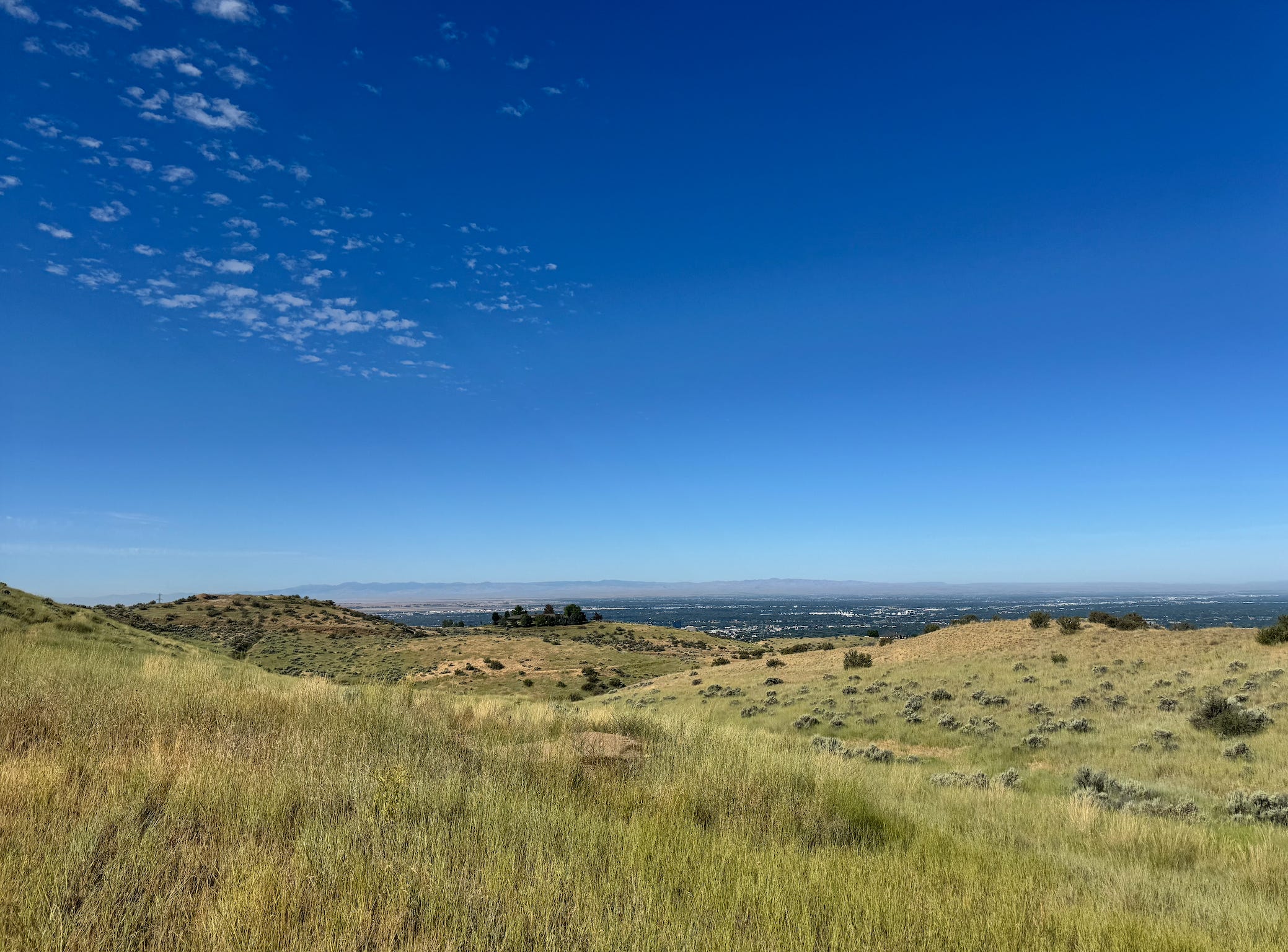
1. Boise’s foothills are a city-defining gift
The first and most obvious lesson is the gratitude that even the most cynical Boisean is struck by like (non-fire-causing) lightning each time they set out on a foothills trail. The hills themselves have, for all intents and purposes, always been here. Long before Boise was incorporated as any kind of city, the Shoshone, Bannock, and Northern Paiute people used the foothills freely. The land was also used for military training through the early part of the 20th century; in fact, unexploded munitions in the hills from over a century ago only added to the headaches of firefighters attempting to control a recent brush fire in the northeastern portion of the hills.
But making the foothills last — and making them available to everybody — did not happen by itself. In this case, good-old-fashioned politics and governance came to the rescue.
By the early 1990s, the growing collection of hikers, mountain bikers, equestrians, and sheep-running ranchers made ad hoc management of the trails unsustainable. Enter Ridge to Rivers, a partnership between the City of Boise, Ada County, the Bureau of Land Management, Idaho Fish and Game, and the Boise National Forest established in 1992 to organize and manage the trails in an official capacity.
This intergovernmental smorgasbord was a solid start; but management of land requires (you guessed it) money. Thankfully, the voters of Boise have stepped up again and again. In 2001, a campaign led by 27-year-old Lauren McLean — a Boise State MPA grad, and our city’s current mayor since 2019, by the way — convinced Boise’s voters to approve a Foothills Levy of $10 million to buy and preserve foothills land permanently. Today, the land bought with that levy is estimated to be worth more than $40 million. Additional levies in 2015 and 2025 have helped the city expand and more competently manage the trails even further since that time.
The result is a public good accessible to Boise’s rich, poor, and everybody in between. Today, Boise’s foothills system connects more than 85,000 acres and includes over 200 miles of multi-use trail, most of which was included in the Boise Trails Challenge. The foothills define this city in every conceivable way; and without the killer combo of grassroots activism and a reasonably responsive interlocking set of government actors, they simply wouldn’t exist as reliably as they do today.
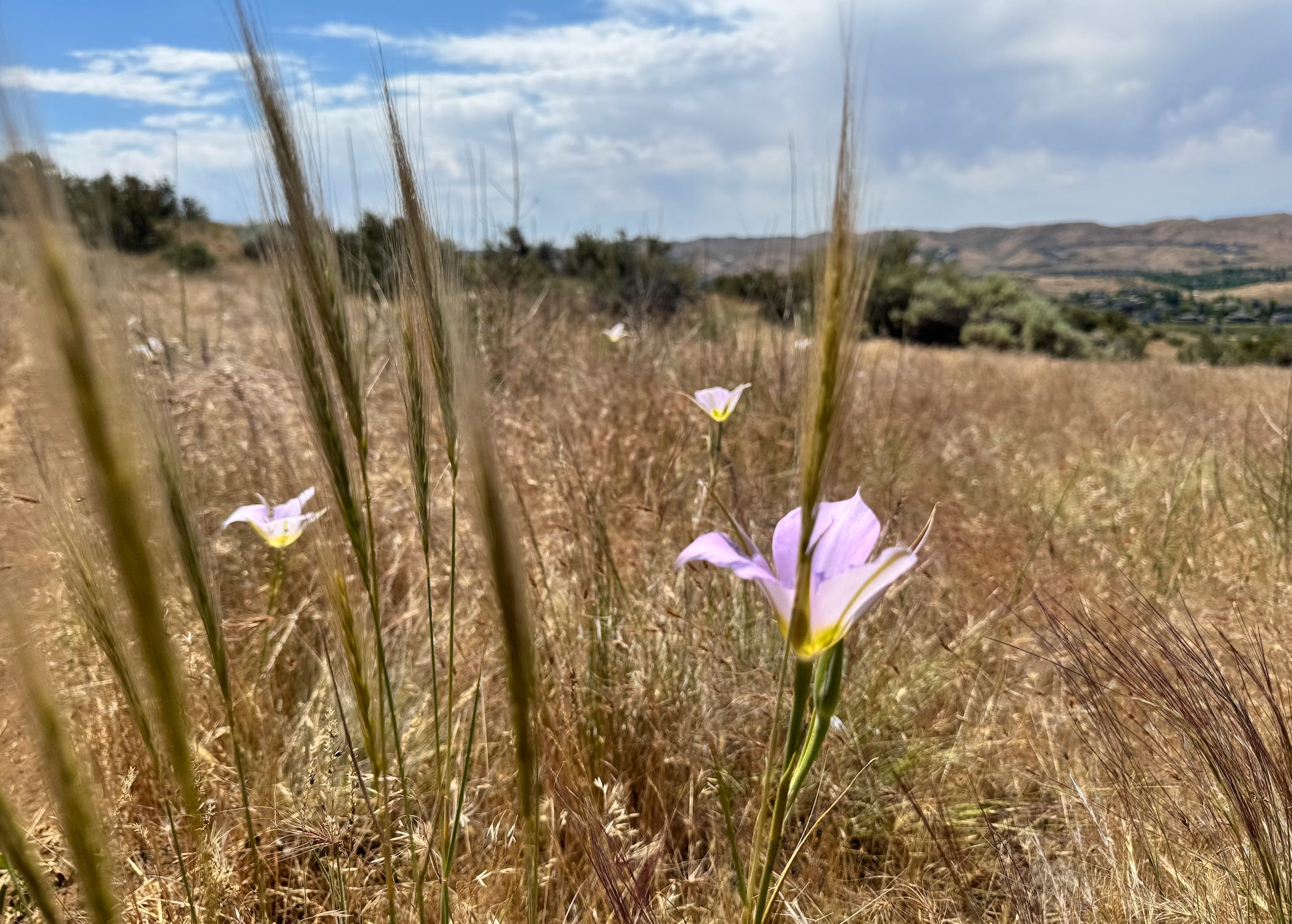
This is all a long way of saying that yes, even on mile 15 of the punishing Dry Creek Trail loop in the far north of the foothills, I was thinking about politics and government. But in a good way!
2. The foothills, and life in the west, are constantly under threat
I was just about two weeks into the challenge when the sad twin realities of typical high desert western life and atypical anthropogenic climate change came knocking, and turned the challenge on its head.
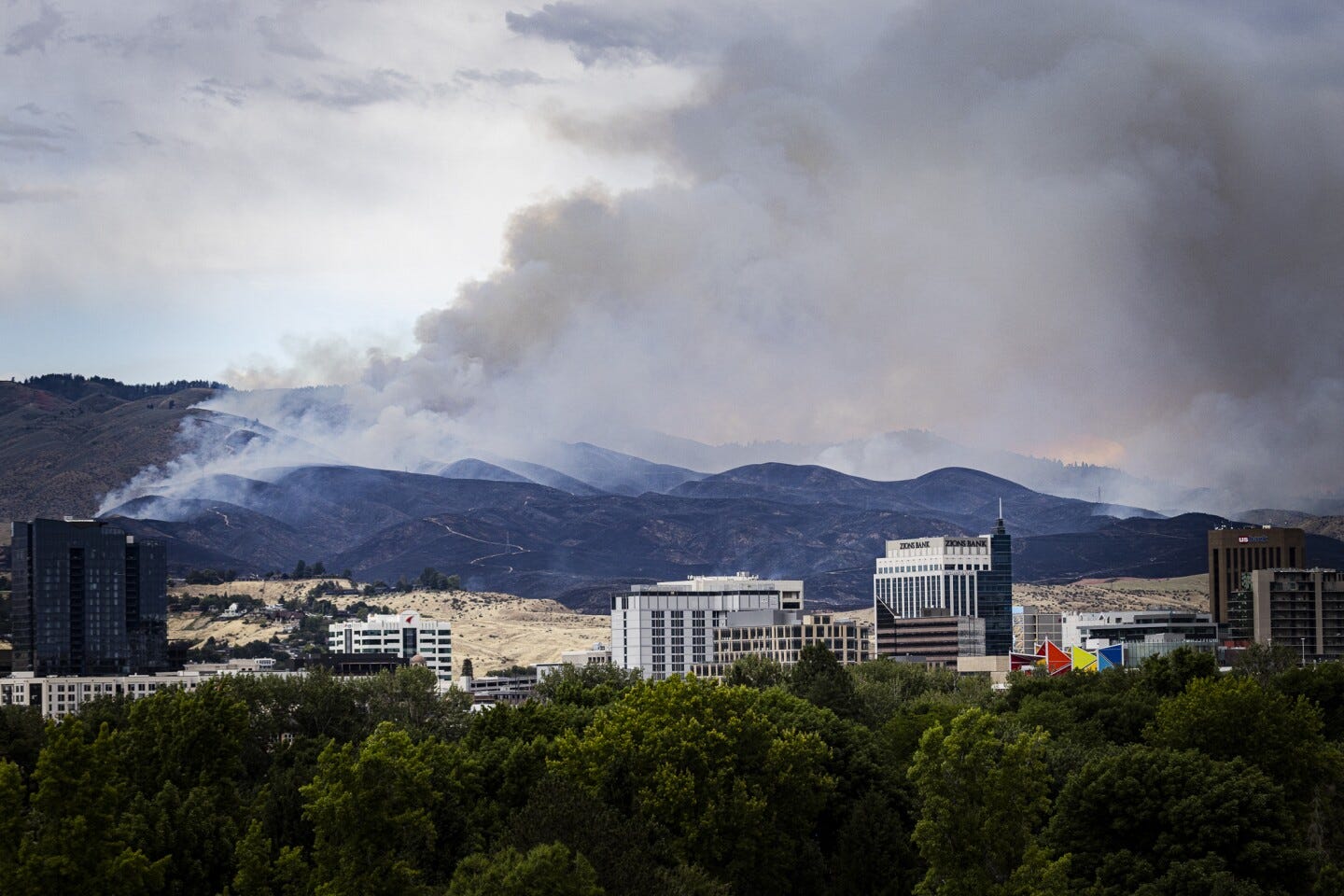
The Claremont Fire began on July 6 around the Crestline Trail, just a tennis-ball’s throw away from where I used to live in Northeast Boise. It quickly spread and engulfed a significant percentage of some of the city’s most frequently-traversed foothills trails, including my personal favorite set of trails in the Military Reserve.
In a dark irony that I nonetheless appreciated, the fire ended up benefitting my personal goal of finishing the challenge. In my case, a family vacation smack dab in the middle of the challenge’s timeline essentially cut the time I had to complete it by 25%. The worst of this fire, and a pause in the challenge that ensued, happened to overlap with much of this week I was out of town anyway. Lucky me.
I hope it goes without saying that I would happily trade that extra week of completion time for even just a few square feet of the sagebrush, trail space, and wildlife back that were lost in the fire. Instead, we’ve lost about 6,000 acres. This is by no means the first wildfire to hit the foothills, and it won’t be the last. The hills are resilient — another fire by my in-laws’ house in Northwest Boise a few years ago already shows no signs that fire ever touched the place. But climate change doesn’t need any of our help to alter these habitats for the worse, and all evidence is that this fire was human-caused. I hope we can do better next year.
3. Don’t judge a trail by its name
On a lighter note: I had the lovely opportunity to experience not just the gorgeous sights, sounds, and smells of the foothills, but the vast, ridiculous variety of trail names that have been assigned to certain segments of the foothills over the years. A small collection of my personal favorites:
Sweet Connie Trail
Whistling Pig Trail
Wild Phlox Trail
Fat Tire Traverse
Femrite’s Patrol
and, of course, “Bob’s Trail”. Thanks, Bob.
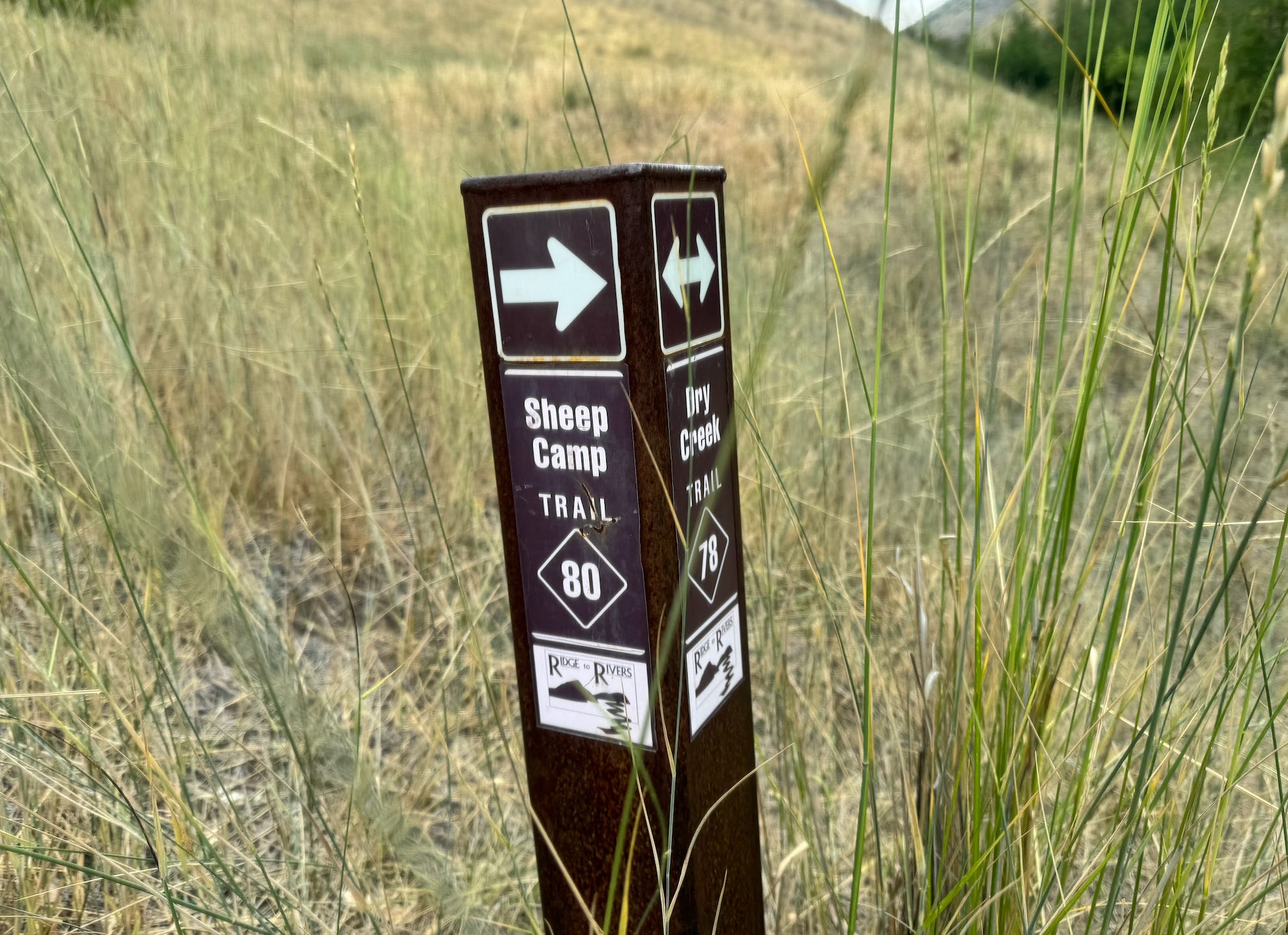
My personal favorite out of the lot was “Sheep Camp” Trail. It’s one of the shortest segments in the entire challenge, a mere 0.8 miles. It’s a brief offshoot at the very beginning of Dry Creek Trail loop, one of the very longest around 14 miles. As a result of its short stature, and my (it turns out, vain) hope that I might see a sheep or two, I opted to leave it for the end of my big Dry Creek run. As it turned out, Sheep Camp was less a fun summer getaway for sheep and more like being led to the slaughter: that is, straight uphill for nearly a mile, which I was not in the mood for after 13.5 of them. Either the sheep are stronger than I am, or they know better than I do not to judge a trail by its adorable name.
4. Finishing (or not) on your own terms is perfectly okay
Upon declaring my intention to do this challenge in the middle of a very hot summer, I received a stern warning from my excellent spouse, who luckily knows me better than I know myself: “don’t overdo it.” I knew, of course, that I would not be one of the crazies who ran 160 miles in a week — much less in three days, which is how long it took the first place “on foot” finisher to complete it. I did, however, think there was an outside shot I could actually finish in the month allotted.
As usual, my wife’s instincts were right. I’ve written before about my tendency to be a chronic completionist, alongside a fiery competitive streak I’ve been actively working to throw a wet blanket over for decades. Sadly, the competitions that usually trip me up the most are the ones I enter into against myself.
A few portions of this challenge really tested my ability to let go of the way-too-high standards to which I hold myself unfairly. There were times I began my runs too late in the day, when the sun was too high and hot for me to sensibly be out there without water or my own personal EMT. There were others when my aging right knee was politely knocking on the door of my body, suggesting that I take a rest day, and I less-than-politely ignored it and kept running.
Thankfully, history, in tandem with my wife’s good sense, came to my rescue. It turns out the initial idea for the Boise Trails Challenge began as something significantly less intense, but nonetheless imposing: finishing the entirety of the foothills over the course of the summer, not a single month. Apparently, too many gung-ho trail runners and bikers still found that too easy, so it’s down to a month now. But for me, learning the challenge’s original scope was a timely reminder that, actually, running 160 miles of foothills over the course of a summer is pretty great, too!
After those few false starts, I arrived belatedly at the conclusion that I did not, in fact, have anything to prove (weird!). I wasn’t running against anybody, including myself — indeed, I was by myself for almost all of the runs I completed in the month of the challenge. At the end of the challenge, even with the trail segments the organizers credited us “for free” because they were currently being engulfed by flames, I ended a hair under 80% finished. I honestly mean it when I say I’m more proud of myself for not finishing than I would have been if I did.
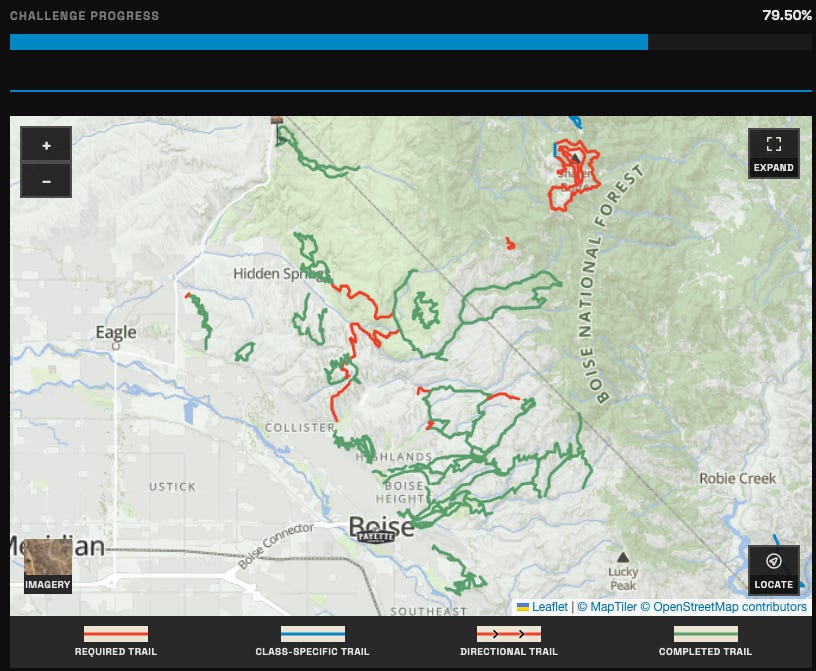
The sheer length and scope of the trails were humbling (in a good way), but so too were the steepness of some of these climbs. 99% of the runs I’ve taken in my life have been on relatively level surfaces with low elevation gain. My longer runs during the challenge frequently saw 1,500+ feet of elevation gain, sometimes over a very short period of time.
I couldn’t be less ashamed to share that very shortly into the challenge, I decided that “160 miles on foot” didn’t necessarily mean “run 160 miles with no exceptions.” Especially on longer or steeper trails, I frequently alternated between running and walking or hiking. I did my best to stop worrying about what the activity is “labeled as” on Strava, or whether my friends on the app would think my pace was way too slow. I was doing the miles; and I doing them on my own terms, in my own time.
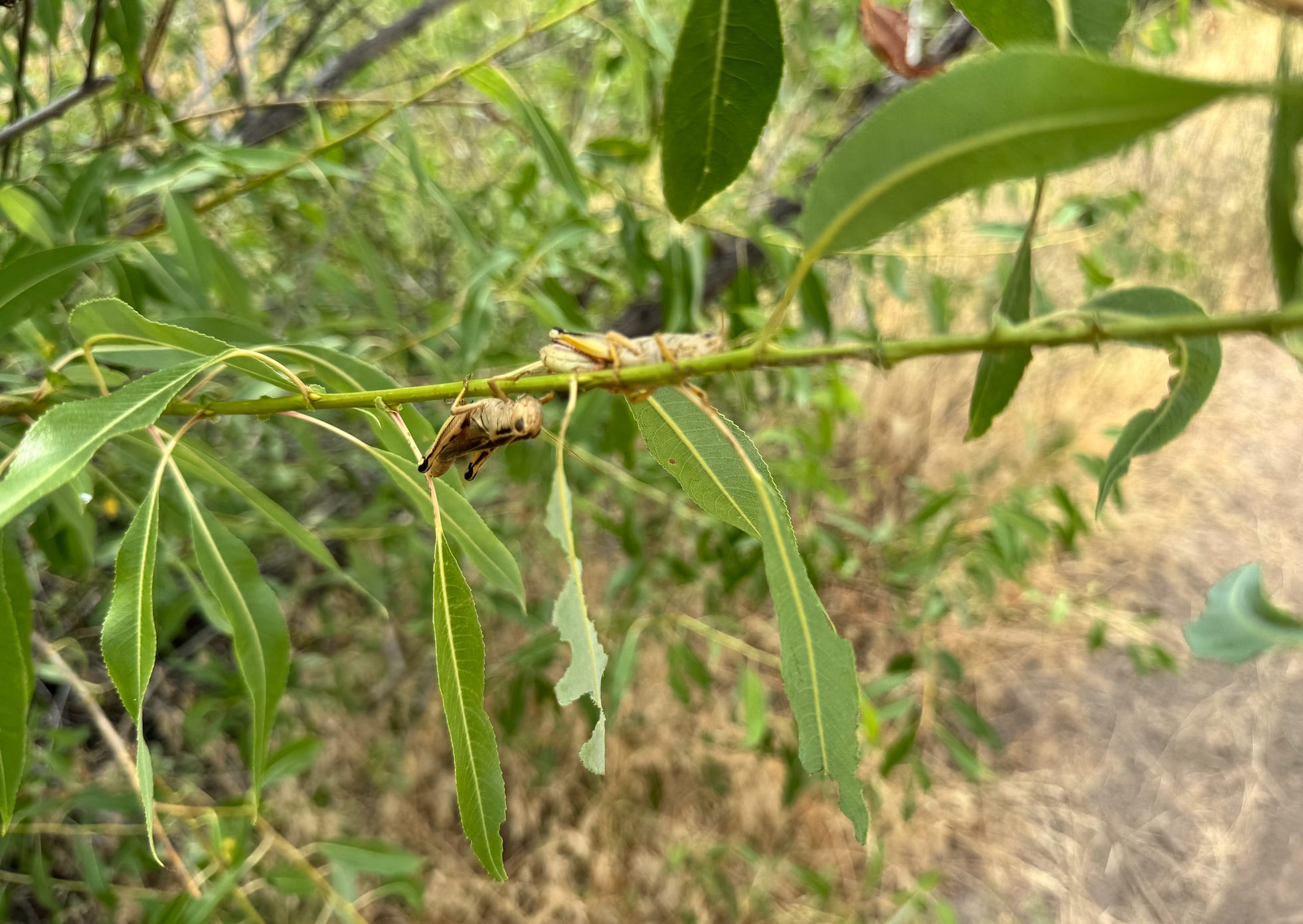
I share this not because I’m thirsty for plaudits about how zen I am, but because this is the kind of attitude I’ve found so elusive for so long, and I know others do, too. So I’m here to tell you that run-walking 16 miles is really just as physiologically nourishing (and probably less likely to lead to injury, in the middle of the wilderness no less) than running 16 miles as fast as you can. I’m also here to tell you that as a bonus, it’s much easier to stop and observe beautiful things when you’re not racing to finish ahead of no one but yourself; things like these two luxurious grasshoppers enjoying themselves on an outstretched branch.
Now that the challenge is officially over, I’ve decided I’m going to finish it — at my own pace, in my own time. I do think I can get it done before the summer’s out without legitimately hurting myself. But I hope to, and will try to, do it not because the app tracking my progress will throw me a big party and tell me I’m a very good boy if I tick up from 80% to 86%. I’ll do it because this challenge — challenging though it’s been — has helped me fall back in love with running, and with the foothills themselves. Like all great loves, I’ll take them as they are and however they come, patiently if I possibly can.
That was fun to read. Thanks for sharing!
"From June 18, when the challenge started, until July 21, which was my last day doing the challenge, I ran, walked, or hiked 142 miles." WHOA! Well done, CH!